White.png)

Story and photo By Chris Meyer
Environment & Climate Change Reporter
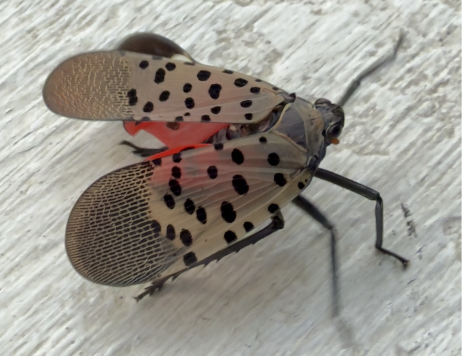
Have you noticed a strange visitor in your neighborhood this past summer? An invasive species called the spotted lanternfly is now spreading throughout the eastern country. This year, New Hampshire residents are facing the insect for the first time. The annoying insects have been active throughout the U.S. since their first appearance in Berks County, Pennsylvania in 2014.
Star Connecticut reporter Chris Meyer also noticed the lanternflies for the first time this year. Since first being introduced to the state in 2020, the spotted lanternfly has spread to every county and nearly every town, with 159 out of 169 towns in Connecticut reporting the insect. There are more of the insects now in their adult phase, so they’re bigger and harder to ignore. Twenty-two states have reported the nuisance with 19 states, including D.C., reporting some infestation.
The spotted lanternfly damages plants by piercing stems, trunks, leaves, and vines to drink sugary phloem sap. The lanternflies take in much more sap than they can use, and the excess sugar is excreted as honeydew. This sap coats the plants and promotes black mold growth. The mold itself grows on the honeydew rather than infecting the plant, but it can cover the leaves and interfere with sunlight reaching them, inhibiting photosynthesis. A severely infested plant can lose stored energy needed for growth, fruit production, and surviving can feed on over 100 plant species including grapevines, hops, fruit trees and orchards, tree of heavens, and black walnut especially saplings.
As climate change causes warmer temperatures in colder places, and precipitation that is no longer reliable, local habitats can become more suitable for invasive species. As the global economy continues to grow and commerce increases, invasive species can spread by hitching rides on ships, and be introduced by planes, trains, and automobiles. Advice from health authorities is clear: to kill the spotted lanternfly if you see one, if you’d like to.